
Hey folks. As promised, here is a step by step of painting a Tau Crisis Suit!
Step One:
Assemble the model! Thats right. I assembled the entire crisis suit, save for the weapons. A major divergence from my normal procedure. Normally I assemble the models bit by bit as I paint them. But these suits have few parts that obstruct other parts, plus that is time consuming. So just get the whole guy built. I did not put on the weapon options yet because I intend on magnetizing those.

Step Two:
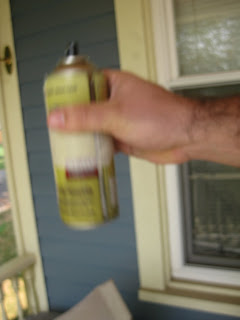
Get yourself a can of Army Painter Desert Yellow color spray primer. They don't print the color names on the can, only on the cap, so I suggest you use some tape and write the name on the can. Who the hell keeps the caps!



Step Five:
Now here is the part where you need to make a decision. To prime or not to prime? Army Painter Color Primers are just that... Spray Prime. You do not need to pre-prime your models. Simply paint them with the base color you want and you are good to go. Having said that, you need to consider shade and hue. For example, Desert Yellow is a very bright color. This will be toned down in a later step using Medium Quickshade, but some of you might like really dark Tau. In that case, spray prime your models black! Or the opposite... you may like a super bright model, so spray them white first. It is useful to know that you can get three shades of the same color, simply by under painting black or white, or leaving the model grey.
It is also useful to know how your surface interacts with the paint. Metal and Plastic react differently to spray prime. If you are painting a metal model, or a combination model, it may be useful to spray them with a black or white undercoat. First of all, to make sure that the model is all the same color, but also, paint easily flecks off from Metal. A dedicated spray prime might be a little more useful at helping the paint not scrape off the metal. Whatever you decide, try it out on an old model first. I used an old Eldar Heavy Weapon and painted it all sorts of different ways when working on metal. The bottom line... EXPERIMENT BEFORE YOU WORK ON YOUR REAL MODEL. You've been warned.
On these plastic models, I am spraying directly onto the plastic, with no under coat. When you spray, hold the can relatively close to the model. The pigment in Army Painter spray is ultra fine. So fine that it may dry in mid air! This will cause a sand paper texture to appear on your model. BAD! The way to avoid it is spray close, in quick short bursts. Never start a burst directly on the model. Activate the spray on the cardboard, then swipe the can over the model.
Spray the models with a thin layer. It is always better to spray multiple thin layers than one thick coat. There may be areas of exposed grey still. It is ok. Flip the model over, do the other side. Then come back to the first side. If you attempt to completely cover the model in one go, you will fill in details. Ive seen it happen, and done it myself. Slow and steady gets the job done here folks!


Step One:
Assemble the model! Thats right. I assembled the entire crisis suit, save for the weapons. A major divergence from my normal procedure. Normally I assemble the models bit by bit as I paint them. But these suits have few parts that obstruct other parts, plus that is time consuming. So just get the whole guy built. I did not put on the weapon options yet because I intend on magnetizing those.

Step Two:
Get yourself a can of Army Painter Desert Yellow color spray primer. They don't print the color names on the can, only on the cap, so I suggest you use some tape and write the name on the can. Who the hell keeps the caps!


Step Three:
Shake the crap out of the can. For real, give it a shake for at least 3 minutes.

Step Four:
Set up your models to be painted. Spray outside whenever possible! I'm spraying these right outside on the front porch. I set up some card board to spray on. I laid out the models, leaving the weapons right on the sprue. You can take them off too, as sometimes the sprue blocks the spray from some parts of the guns, forcing you to do touch up. The choice is yours, do as you will.

Step Five:
Now here is the part where you need to make a decision. To prime or not to prime? Army Painter Color Primers are just that... Spray Prime. You do not need to pre-prime your models. Simply paint them with the base color you want and you are good to go. Having said that, you need to consider shade and hue. For example, Desert Yellow is a very bright color. This will be toned down in a later step using Medium Quickshade, but some of you might like really dark Tau. In that case, spray prime your models black! Or the opposite... you may like a super bright model, so spray them white first. It is useful to know that you can get three shades of the same color, simply by under painting black or white, or leaving the model grey.
It is also useful to know how your surface interacts with the paint. Metal and Plastic react differently to spray prime. If you are painting a metal model, or a combination model, it may be useful to spray them with a black or white undercoat. First of all, to make sure that the model is all the same color, but also, paint easily flecks off from Metal. A dedicated spray prime might be a little more useful at helping the paint not scrape off the metal. Whatever you decide, try it out on an old model first. I used an old Eldar Heavy Weapon and painted it all sorts of different ways when working on metal. The bottom line... EXPERIMENT BEFORE YOU WORK ON YOUR REAL MODEL. You've been warned.
On these plastic models, I am spraying directly onto the plastic, with no under coat. When you spray, hold the can relatively close to the model. The pigment in Army Painter spray is ultra fine. So fine that it may dry in mid air! This will cause a sand paper texture to appear on your model. BAD! The way to avoid it is spray close, in quick short bursts. Never start a burst directly on the model. Activate the spray on the cardboard, then swipe the can over the model.
Spray the models with a thin layer. It is always better to spray multiple thin layers than one thick coat. There may be areas of exposed grey still. It is ok. Flip the model over, do the other side. Then come back to the first side. If you attempt to completely cover the model in one go, you will fill in details. Ive seen it happen, and done it myself. Slow and steady gets the job done here folks!

Step Six:
Once the spraying is done, bring your little rascal inside and get ready for the next stage! I actually assembled the weapons at this point. I will not magnetize this particular model, since most of the suits in my army will have the same gear. I will do a magnetizing tutorial later. At this point, the little plastic stand is quite useful too. Stick that up his butt.


Now it is time to bust out your Army Painter Quickshade. I am using Medium tone for this army. With a cheapo brush, apply the shade to the model. Observe in the video:

Check back next week for the rest of the tutorial.
Public Service Announcement:
Protect your baby. Spray outside. You may think it is ok to spray just a swipe or two of primer onto your models in the confines of your hobby room. Ventilated or not, this can be dangerous to your baby. He weighs a handful of pounds. If you are like me, you way much, much, much more than that. Just a few particles of possibly dangerous inhalants can be much more harmful to your baby. Do you and your baby a favor, spray outside.


.jpg)
.jpg)





.jpg)